
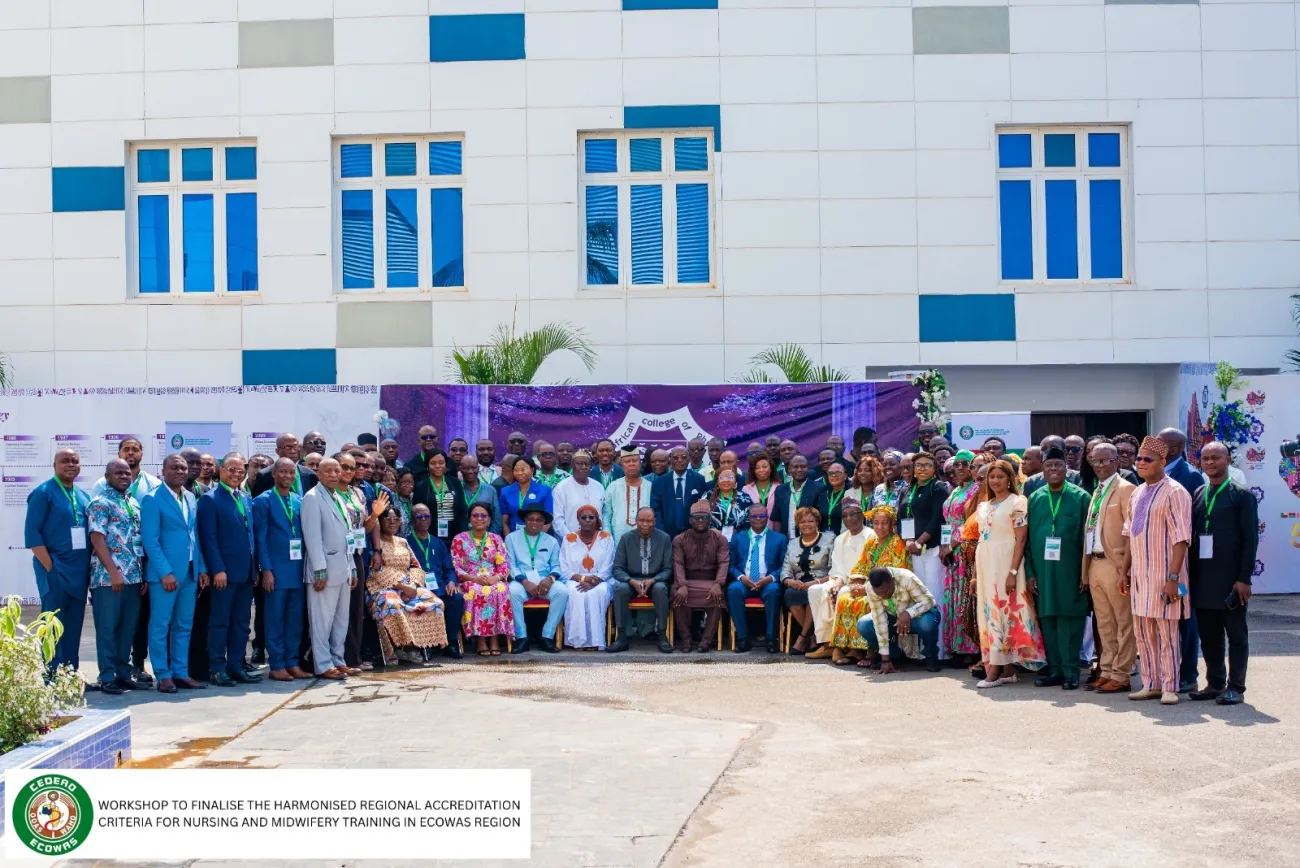
For a woman giving birth, a child needing treatment or a family seeking care, the competence of a nurse or midwife can make a life-changing difference. Strengthening the training that prepares these professionals to provide safe, quality care is the focus of a regional workshop taking place in Abuja, Nigeria, from 29 to 31 October 2026.
The West African Health Organisation (WAHO), the specialised Institution of the Economic Community of West African States (ECOWAS) responsible for health issues, is convening the workshop to develop harmonised regional regulatory and accreditation criteria for nursing and midwifery training.
The initiative builds on earlier work to harmonise initial training curricula, undertaken with Member States, the African and Malagasy Council for Higher Education (CAMES) and West African professional colleges. It seeks to establish common standards that help training institutions prepare graduates for the responsibilities they will assume in hospitals, maternity units and community health posts.
Participants are reviewing accreditation, regulation and evaluation criteria, alongside progress in nursing and midwifery education. They will also develop a harmonised training logbook to document students’ practical experience during clinical placements, field postings and internships. This would support more consistent assessment of the skills students acquire before entering professional practice.
In his address, delivered on his behalf by Professor Joseph Olorunda, WAHO Director General Professor Palokinam T. PITCHE emphasised that tackling health workforce shortages requires both increasing the number of professionals and ensuring the quality of their preparation. He called for credible institutional assessments, safe clinical learning environments and regular reviews.
Opening the workshop on behalf of Nigeria’s Coordinating Minister of Health and Social Welfare, Professor Muhammad Ali Pate, Dr Dakum Longji underscored the importance of preparing nurses and midwives to deliver safe, effective and compassionate care.
The workshop also seeks stronger integration of institutions offering programmes in English, French and Portuguese into accredited West African colleges. Expected outputs include harmonised regional criteria and an agreed implementation roadmap.
The implementation of the regional criteria is intended to strengthen recognition of diplomas and their equivalences which subsequently facilitate professional mobility and help communities access competent and specialised nurses and midwives across the region.


