
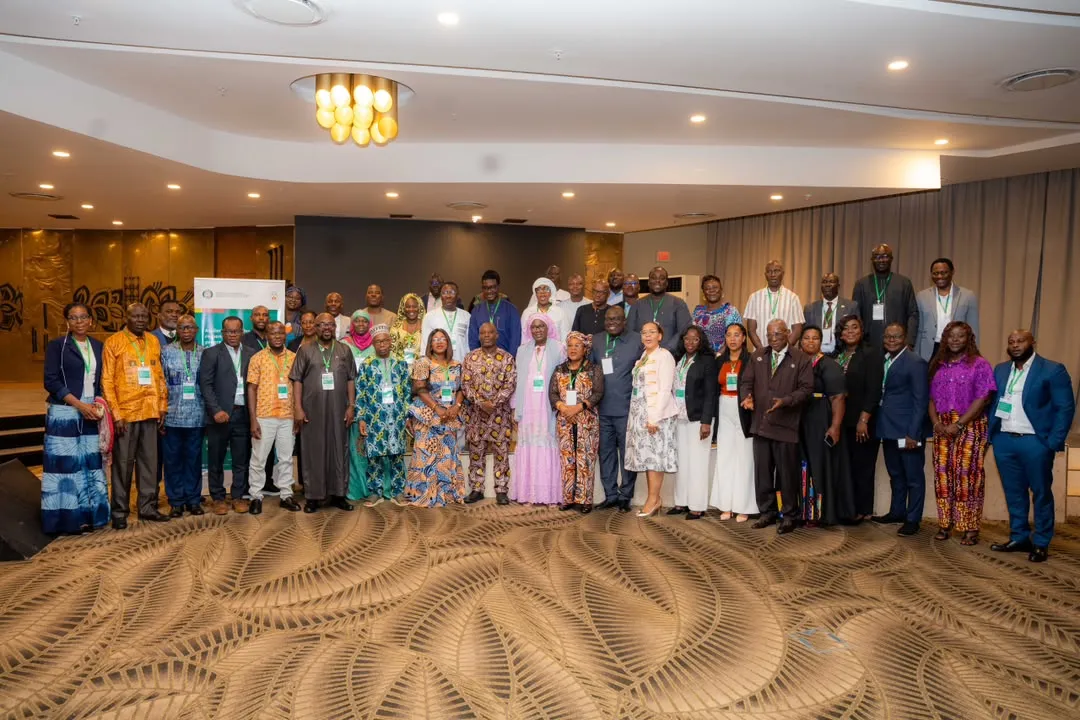
Families across West Africa should be able to get nutrition support at their local health centre and count on the quality of the fortified foods they buy. These priorities shaped the recommendations of National Nutrition and Food Fortification Programme Managers, Experts and Partners who met in Lome, Togo, from 18 to 21 November 2026.
The West African Health Organisation (WAHO), the specialised Institution of the Economic Community of West African States (ECOWAS) responsible for health issues, convened the workshop. According to the harmonised framework, more than 54.8 million people across the Sahel, West Africa and Cameroon were at risk of acute food and nutrition insecurity between June and August 2026.
Opening the workshop on behalf of Togo’s Ministry of Health, Public Hygiene, Universal Health Coverage and Insurance, Dr Abdoukarim NABA MOUCHEDOU, WAHO National Liaison Officer in Togo, called for nutrition services to become part of routine primary healthcare. He reaffirmed Togo’s commitment to this work and called for reliable funding and better use of nutrition data.
Dr Fatu NDIAYE, representing Senegal as Chair of the ECOWAS Authority of Heads of State and Government, urged Member States to direct more domestic funding towards interventions with the greatest impact, share data and apply common standards for food fortification.
Representing the WAHO Director General, Professor Palokinam T. PITCHE, Dr Virgil K. LOKOSSOU, WAHO Director of Healthcare Services, called for stronger local production and measurable results. “The time has come to move beyond commitments towards collective action, shared responsibility and tangible results,” he said.
To help countries identify where needs are greatest and respond to nutrition emergencies, participants recommended linking a regional nutrition data platform to national DHIS2 systems, using common indicators and supporting national nutrition surveys.
For the foods families buy, participants called for stronger quality checks, wider use of regional ECOSAN standards and tax exemptions on the vitamin and mineral mixtures used to fortify foods. They also urged governments to work more closely with producers through national food fortification alliances. The recommendations will inform the development of a regional nutrition and food fortification strategy.


