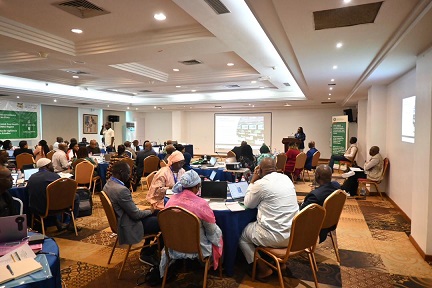
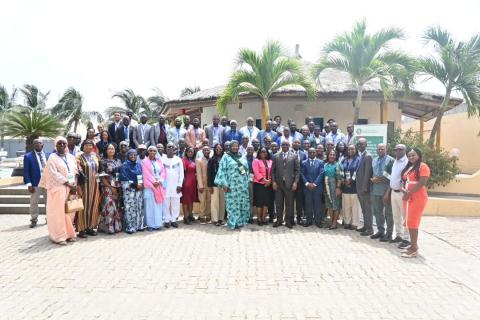
The West African Health Organisation (WAHO), a specialised institution of the Economic Community of West African States (ECOWAS), is organising, from 23 to 27 February 2026 in Cotonou, Benin, the regional workshop on strengthening integrated surveillance through the “One Health” approach in ECOWAS.
This meeting brings together representatives of ministries responsible for human health, animal health and environment from ECOWAS Member States, regional institutions, as well as technical and financial partners such as Africa CDC, the World Health Organization (WHO), GIZ/RPPP3 and the Institut Pasteur de Dakar.
The workshop aims to strengthen regional epidemiological surveillance systems by promoting an integrated approach linking human health, animal health and the environment, in line with the ECOWAS “One Health” framework.
On behalf of the Minister of Health of Benin, the Deputy Chief of Staff, Dr Françoise Sibylle ASSAVEDO, emphasised that public health challenges require coordinated, integrated and anticipatory responses. She stressed that the “One Health” approach represents a structural transformation of surveillance systems, considering human, animal and environmental health as a continuum. She advocated for the harmonisation of data management, improvement of health information quality and interoperability of digital systems as pillars of regional health sovereignty.
Representing the Director General of WAHO, Dr Mamadou DIARRASSOUBA, Executive Director of the ECOWAS Regional Centre for Surveillance and Disease Control (RCSDC), highlighted that this workshop marks a strategic milestone for regional health security, in a context of increasing cross-border epidemic threats. He recalled the progress achieved, notably the operationalisation of the DHIS2 platform, the development of the ECOAlert platform, the automatic data sharing among Member States and the adoption of the “One Health” framework. However, he pointed out persistent challenges related to interoperability, integration of environmental and animal health indicators, and the sustainability of surveillance mechanisms, calling on Member States and partners to strengthen the Regional Integrated Surveillance Network and implement the digitalisation roadmap.
Ms Maryam Ibrahim BUBA, representing the Africa CDC Regional Director for West Africa, recalled that diseases know no borders, requiring rapid, coordinated and cross-border responses. She highlighted five strategic priorities: strengthening the regional surveillance network, accelerating digital transformation, consolidating the “One Health” approach, improving early warning and rapid response mechanisms, and enhancing regional preparedness for health emergencies.
Since 2014, WAHO has been developing a regional digital platform based on DHIS2 to improve data sharing and epidemic disease monitoring. Despite progress, challenges remain regarding interoperability, resilience of data collection and transmission mechanisms, and the full integration of animal and environmental health indicators.
The workshop aims to:
- Assess the epidemiological situation in Member States;
- Present and validate the operational framework of the Regional “One Health” Surveillance Network;
- Review and adopt the regional list of priority diseases;
- Strengthen the interoperability of digital surveillance systems;
- Develop and validate a regional roadmap for the digitalisation of integrated surveillance;
- Strengthen multisectoral collaboration and information sharing among countries and sectors.
This workshop represents a decisive step towards strengthening health security in West Africa by improving preparedness, early detection and coordinated response to public health emergencies.